

Should I Wear a Night Guard? 7 Signs You May Need One
You could be damaging your teeth every night without even knowing it.
If you wake up with a sore jaw, a morning headache, tooth sensitivity, or unusually tender teeth, nighttime grinding or clenching could be the culprit. Because bruxism happens while you sleep, it can quietly put hundreds of pounds of pressure on your teeth night after night—often without you realizing it.
Over time, that repeated pressure can wear down enamel, increase sensitivity, strain the jaw, and contribute to chipped or damaged teeth. The good news? A night guard can act as a protective barrier between your teeth, helping minimize the impact of grinding and clenching while you sleep.
If your teeth could use protection while you sleep, a night guard may be a simple step toward protecting your smile and waking up more comfortably.
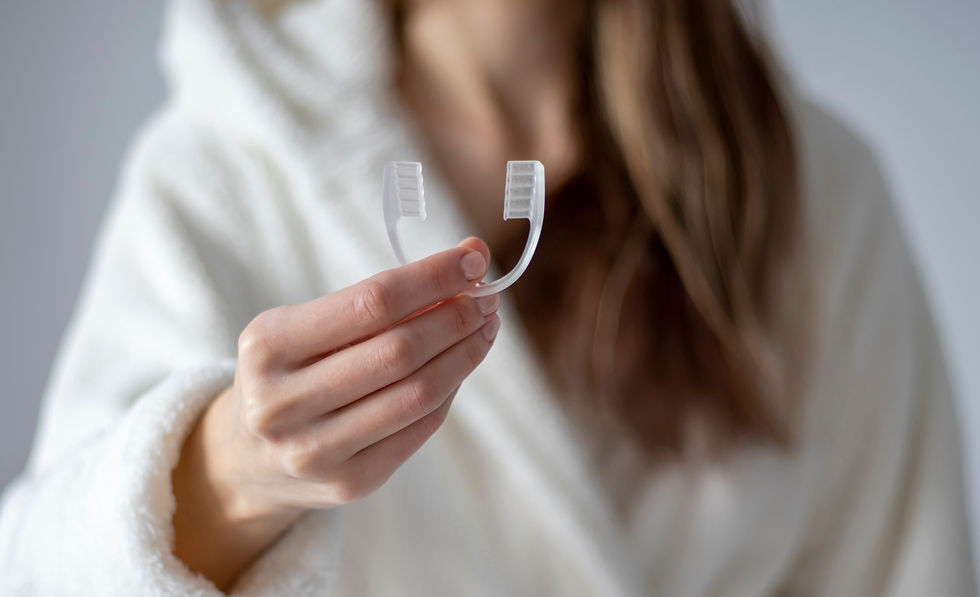
WHAT IS A DENTAL NIGHT GUARD?
A dental night guard is a custom-fitted oral appliance that protects your teeth from nighttime grinding and clenching. Usually made of durable, thin plastic, the guard fits comfortably over your teeth and creates a protective barrier between your upper and lower teeth while you sleep. A dentist may recommend a night guard to reduce the effects of bruxism, such as tooth wear, sensitivity, jaw discomfort, and damage from repeated grinding or clenching.
WHAT DOES A NIGHT GUARD DO?
A night guard is designed to protect your teeth while you sleep, particularly if you grind or clench your teeth. The appliance creates a protective barrier between your upper and lower teeth, helping prevent them from rubbing or pressing together repeatedly. This can reduce wear and damage from nighttime grinding and may also ease pressure on the jaw.
Dentists may recommend mouth guards for several reasons, including teeth grinding and clenching, certain jaw conditions, and protecting the teeth during sports or other activities. However, a night guard is an appliance worn while sleeping and is commonly used to protect teeth from the effects of bruxism.
7 SIGNS YOU MAY NEED A NIGHT GUARD
Dentists recommend mouth guards for many different reasons. You might need one if you:
Grinding or Clenching the Teeth
Nighttime grinding or clenching, known as bruxism, is one of the most common reasons dentists recommend a night guard. Because grinding often occurs during sleep, the habit may go unnoticed until a dentist or sleep partner notices the signs.
Worn or Flattened Teeth
Repeated grinding can gradually wear away tooth enamel, making teeth look flatter, shorter, or more worn than before. A night guard can help protect the teeth from continued contact while sleeping.
Morning Jaw Soreness
Morning jaw soreness, stiffness, or tightness may indicate that the jaw muscles worked throughout the night. Clenching and grinding can put extra stress on the muscles and joints around the jaw.
Frequent Morning Headaches
Morning headaches, particularly around the temples or forehead, can sometimes be associated with nighttime teeth grinding or clenching. Repeated muscle tension from bruxism may contribute to discomfort upon waking.
Tooth Sensitivity
Grinding can wear down enamel, potentially leaving teeth more sensitive. Discuss unexplained sensitivity to hot, cold, or sweet foods with a dentist to determine the underlying cause.
Cracked or Chipped Tooth
Repeated pressure from grinding can place significant stress on the teeth and may contribute to chips, cracks, or other damage. A night guard creates a protective barrier between your upper and lower teeth while you sleep.
A Partner Notices Night Time Grinding
Sometimes, a sleep partner is the first to notice nighttime grinding. Hearing grinding or clenching during sleep can be an important reason to discuss possible bruxism with a dentist. In many cases, people grind without realizing it.
Having one or even several of these signs does not automatically mean a night guard is necessary. A dental professional can evaluate the teeth, jaw, and symptoms to determine whether bruxism is present and whether a night guard is an appropriate treatment option.
CUSTOM-FITTED NIGHT GUARD VS. STORE-BOUGHT NIGHT GUARDS
A custom-fitted night guard is designed specifically for the shape of the teeth and bite, providing a more secure and comfortable fit than many store-bought options. Custom guards are also made from dental-grade materials and can provide more consistent protection against nighttime grinding and clenching. While over-the-counter guards may be a convenient option, a dentist can determine the appropriate type and fit for individual needs.
TALK TO YOUR DENTIST IF A NIGHT GUARD IS RIGHT FOR YOU
If nighttime grinding or clenching may be affecting the teeth, don’t wait for the damage to become more noticeable. Anderson Family Dental can evaluate signs of bruxism, assess your teeth and jaw health, and determine whether a custom night guard is appropriate.
Schedule a consultation with Anderson Family Dental today to protect your smile and see whether a custom-fitted night guard is the right solution.

Dr. Bryant Anderson, DMD
Dr. Bryant Anderson, dentist in Winter Park, FL, knew from a young age that he wanted to become a dentist. He studied Biology and Chemistry at Utah Valley University. He continued his education at the University of Florida College of Dentistry earning his Doctorate in Dental Medicine. As a top-ranking graduate in his dental class, Dr. Bryant Anderson was inducted into the dental honor society OKU. READ MORE


