

How Does Your Dentist Diagnose Gum Disease?
Many people are surprised when their dentist tells them they have gum disease. That is because gum disease often does not hurt at first. In fact, you can have it for a long time without knowing it. At Anderson Family Dental, we believe you should understand what is happening with your oral health and why we may recommend gum disease treatment in Winter Park, FL.
This article explains how dentists diagnose gum disease, what those findings mean for your oral health, and what your treatment may involve.
WHAT IS GUM DISEASE?
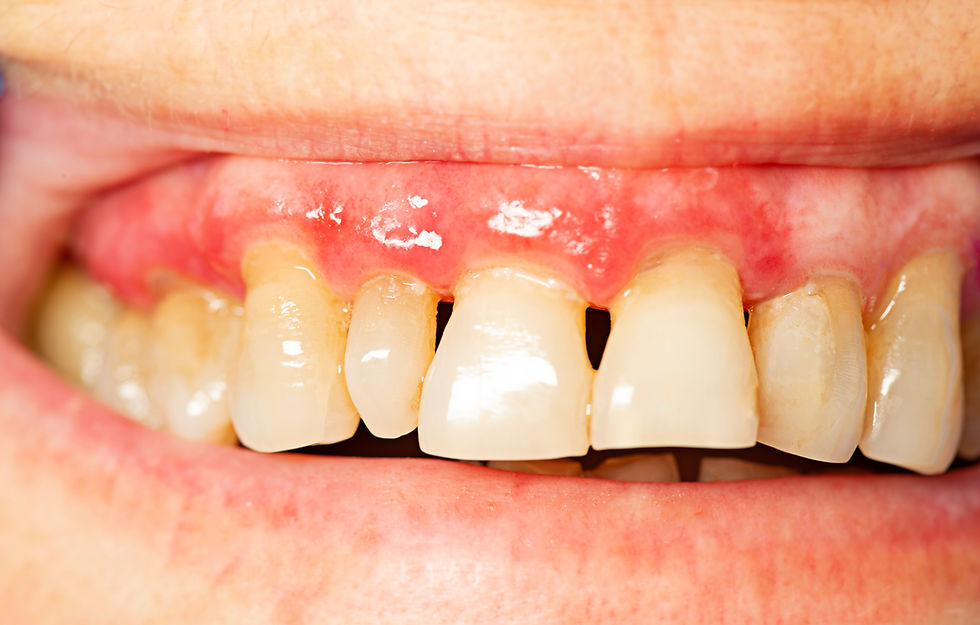
Gum disease is a chronic, progressive condition that affects the gums, as well as the ligaments and bone sockets that support your teeth. It begins with gingivitis, which causes red, swollen gums that may bleed when you brush or floss. Gingivitis can often be reversed with proper care.
If gum disease is not treated, it can turn into periodontitis. This is a more serious condition that can cause the bone tissue around the tooth roots to shrink. Over time, this can lead to loose and shifting teeth, changes in your bite, gum recession, and tooth loss. Untreated periodontitis is also linked to increased risks for health conditions like heart disease, diabetes, pancreatitis, and arthritis.
COMMON SIGNS OF GUM DISEASE
Some signs of gum disease are easy to miss. Others may be more noticeable. When you see our team for a gum disease consultation in Winter Park, FL, we’ll look for symptoms such as:
Bleeding gums when you brush or floss
Red or swollen gums
Gums pulling away from the teeth
Tooth sensitivity
Teeth that feel loose or shifting
In many cases, gum disease can fly under the radar for years, even without noticeable symptoms. That’s why it’s so important to keep up with regular dental visits!
HOW WE DIAGNOSE GUM DISEASE
Step 1: A Visual Exam of Your Gums and Teeth
We’ll start by looking closely at your gums and teeth. Healthy gums are usually pink and firm. Signs of gum disease include redness, swelling, or areas where the gums look irritated.
Our team will also check for plaque and tartar buildup. These bacteria-filled deposits are a major cause of gum disease.
Step 2: Periodontal Charting
One of the most important tools for diagnosing gum disease is periodontal charting. This involves gently measuring the space between your teeth and gums using a small instrument.
These spaces are called gum pockets.
Healthy gum pockets are usually 1 to 3 millimeters deep
Deeper pockets can indicate gum disease
Bleeding during measurements is also a warning sign
These numbers help us map the attachment between your gums and tooth roots. As gum disease progresses, it can damage the fibers that attach your gums to the root surfaces of the teeth. It’s also harder to keep deep pockets clean at home, giving bacteria an opportunity to build up and cause further damage.
Step 3: Dental X-Rays
X-rays allow us to see what is happening below the gumline. While gum disease does not always show on the surface, X-rays can reveal bone loss around the teeth.
Bone loss is a key sign of more advanced gum disease. We may also compare current X-rays with older ones to assess whether changes have occurred over time.
Step 4: Reviewing Your Health History and Risk Factors
Gum disease does not affect everyone the same way. Our team will also consider factors such as:
Smoking or vaping
Diabetes or other health conditions
Family history of gum disease
Certain medications
Oral hygiene habits
Looking at the whole picture helps us make an accurate diagnosis and recommend the right gum disease treatment in Winter Park, FL.
HOW DENTISTS DETERMINE THE STAGE OF GUM DISEASE
After reviewing your exam, measurements, and X-rays, our team will determine whether you have gingivitis or periodontitis. Periodontitis can be classified as mild, moderate, or advanced.
This staging helps guide treatment and long-term care.
WHAT HAPPENS AFTER GUM DISEASE DIAGNOSIS?
If we find signs of gum disease, we’ll show you exactly what we see and ensure that you fully understand your condition and all appropriate treatment options.
Your gum disease treatment in Winter Park, FL may include:
Professional cleanings or scaling and root planing
Osseous surgery
Bone grafting
Improved home care routines
More frequent dental visits
Ongoing monitoring of gum health
Early treatment can help stop gum disease from getting worse and protect your smile. If your periodontal disease is very advanced and you need treatments that go beyond what we can provide at Anderson Family Dental, we work closely with trusted periodontists in Winter Park, FL, and will provide a referral if needed.
CAN GUM DISEASE BE REVERSED?
Gingivitis can often be reversed with professional care and good brushing and flossing habits at home. Bone loss from periodontitis is considered irreversible, but there are treatments that can help restore healthier bone levels. In both cases, gum disease can be managed successfully with ongoing care and regular dental visits.
The sooner you get a gum disease diagnosis, the easier it will be to control.
PROTECTING YOUR SMILE, STARTING WITH A STRONG FOUNDATION
Gum disease diagnosis is not based on guesswork. Dentists use careful exams, measurements, X-rays, and your health history to fully understand your gum health.
If you think you need gum disease treatment in Winter Park, FL, or it has been a while since your last dental visit, get in touch with our team! We’re happy to provide gentle, comprehensive care so you can enjoy a strong, healthy smile for years to come.

Dr. Bryant Anderson, DMD
Dr. Bryant Anderson knew from a young age that he wanted to become a dentist. He studied Biology and Chemistry at Utah Valley University. He continued his education at the University of Florida College of Dentistry earning his Doctorate in Dental Medicine. As a top-ranking graduate in his dental class, Dr. Bryant Anderson was inducted into the dental honor society OKU. READ MORE


